Carpal Tunnel Surgery As A Working Artist
“Carpal Tunnel Syndrome” is a three word horror story to most working artists. The carpal tunnel is formed by bone and transverse carpal ligament, and CTS is caused from inflammation of the connective tissue putting pressure on your median nerve and flexor tendons. It means slowing down, reducing workload, and taking time off to relieve the pressure— in an industry where hustle culture reigns supreme and bills are only a bad week away from catastrophic at times. It means, failing this, that you may lose function in your hands, with persistent numb, tingling sensations, discomfort, the greatest hits. You can understand why these three words are a fear lurking at the back of many working artist’s minds.
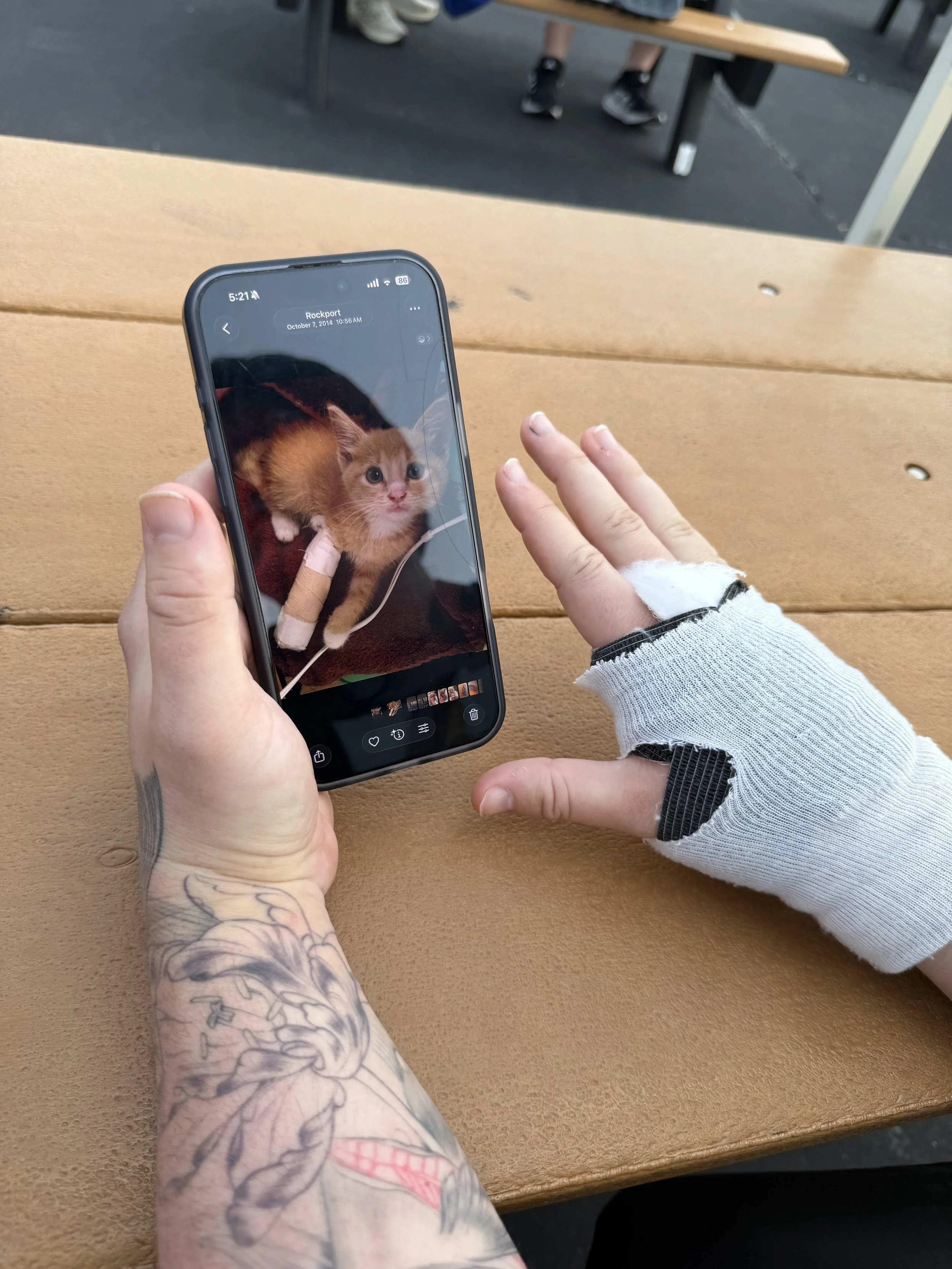
Like father, like son!
I found out that I had bilateral carpal tunnel syndrome at the beginning of the year through my neurologist. I had some numbness I’d wake up with in my hands, and I’d had a day or two of wrist pain significant enough that I had to reschedule or cancel appointments or stop drawing. For the most part, I found it to be a mild inconvenience, but I booked an appointment in February with an orthopedic specialist to discuss what could be done for my carpal tunnel and what my options were.
To my surprise, the options presented to me at the ortho were pretty easy and low key— sleeping with a wrist brace on can minimise further damage and the compression can even reduce the swelling enough to no longer be medically significant. There’s also injectable steroids that reduce the swelling. I opted to try both of these options, since my hands are integral to my career; I was warned that if the swelling returned shortly after the steroid injection, it is a flag for surgery being an option. I also had a ganglion cyst causing trigger finger in my right index finger, which was similarly given a steroid injection… and is actually the reason I got this surgery! After a month or two of it being reduced and not completely gone, the cyst grew back and I was having some light locking with the finger, which was annoying and maybe a like, 1-2/10 on the pain scale.
Unfortunately, since I didn’t have success with the ganglion cyst steroid injection, my ortho recommended surgery, and since I have carpal tunnel syndrome in the wrist, she said it would be worthwhile to just do them both in case the wrist injection was not a long term solution. I had multiple questions, and I recommend asking your doctors questions and advocating for yourself!
How long will I be out of work for as someone who uses their hands?
Answer: I was told I could go back to work as soon as the next day. This ended up not being entirely true for tattooing specifically, but for most people I’d say this is true.
Should I stop using my hand post surgery?
Answer: Actually, they want you to use your hand after surgery to prevent stiffness and scar adhesions!
How much will it cost?
Answer: It’s so hard to find out how much your insurance vs. doctor vs. everything else will cost. It ranges from $2-6k depending on where you are in the country, if you’re at a surgery center vs. hospital vs. specialist office, etc. and if you have insurance. Mine was billed for about $2815, but I had it done in a hospital since an ambulatory surgery center didn’t feel comfortable performing surgery with my bleeding disorder.
What are the risks?
Answer: Since the surgery is basically just cutting the ligament, there’s not really a lot of risks of damaging the surgical site in a traditional way. There’s no sutures to tear inside and you can’t tear the carpal tunnel more. There is, of course, a risk with any surgery with anesthesia that you can react poorly and there’s a risk of nerve or blood vessel damage, but these are all very, very rare. It’s an extremely safe procedure!
How long will it take?
Answer: 10 minutes. I’m not kidding. You’ll be there longer than that just due to the nature of anesthesia and everything, but the procedure itself takes about 10 minutes and is not bloody or anything. You can watch a real surgery being performed on YouTube here. Discretion advised, obviously, but it made me feel better to see the surgery being done to know what to expect and understand where pain and discomfort come from!
I had a sinus surgery scheduled for August 17th already; I confirmed with my sinus surgeon that stacking these surgeries wasn’t an issue before scheduling for August 6th.
Pre-op: In addition to the surgical pre-op instructions, I did a bit of extra prep. I live with my wife so I was not worried about being completely without help, but I did purchase some pre-made/easy meals for us to eat while I was in recovery. I do most of the cooking but that was absolutely out of the question, so I bought pre-made lasagna, made some overnight oats, got a case of Uncrustables from Costco, that sort of thing. I had made a few meals for us and put them in the fridge ahead of time.
Some things I think are super helpful to purchase or consider before getting surgery, regardless of if you’re getting your dominant hand done:
Hand cleaning wipes— you’ll figure out how to wash your one good hand regularly, but I invested in a tube of wipes to clean my fingers/top of my hand/etc. while keeping the brace on.
Jar opening devices— there are a variety of styles and price points for these. In general, supplies meant for arthritic or geriatric patients are great for any sort of surgical recovery regimen! I’d also consider things like grip aids for pencils/utensils/etc., which can also be found on the same website.
Nitrile gloves & bandage wraps— I cheated a bit on this one by being a tattooer, but I would use a glove over my dressing and then tightly wrap coflex tape around the wrist to keep water out of my dressing in the shower. Super effective! They do make waterproof hand cast covers, which also function well, but it was easier for me to use a nitrile glove so I could wash myself more efficiently in the shower.
Single handed foods—not being able to wash your hands means things like tacos, sloppy joes, etc. are going to be a problem for you. I did a couple of soups, pastas, and overnight oats, since they can all be eaten with a spoon. If you’re getting your dominant hand done and don’t have very good dexterity with your non dominant hand, it’s super worthwhile to try and get things like utensil use figured out with that hand,
Trim your nails ahead of time! — you won’t be able to use a nail clipper very easily for the first few days and having extra long fingernails is just an extra burden to be aware of.
Electric toothbrush— this isn’t a necessity but it’s much, much easier to brush your teeth with your non dominant hand with an electric toothbrush vs. a traditional.
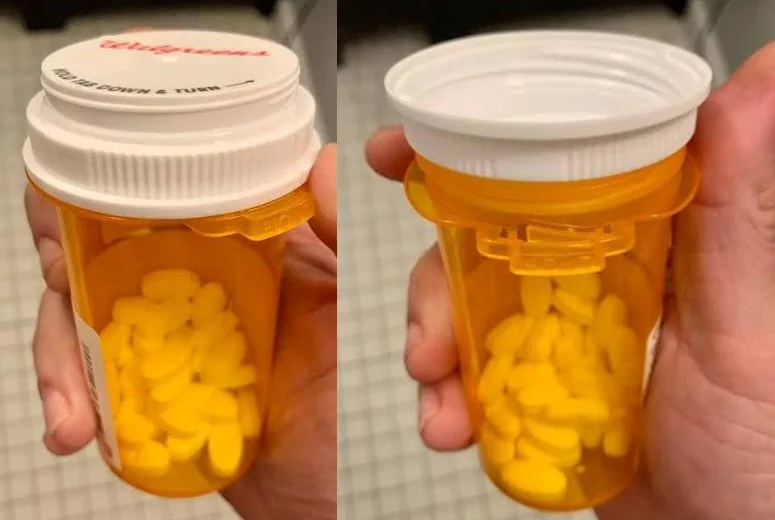
Flip your medication caps upside down!
Obviously do not do this if you need the child-safe caps on to protect children or others in your home, but flipping the lid of your medication cap upside down can reduce the force needed to open it.
Day of Surgery: I have a rare bleeding disorder where my platelets don’t function appropriately, so I had to come in extra early to get an infusion over the course of an hour. This literally took longer than the rest of the procedure!
The anesthesia used is monitored anesthesia care (MAC), or twilight anesthesia. You’re sedated/asleep and not intubated, so you don’t feel anything but you’re also not out as hard. It also means waking up is super easy. I remember right up until being put under, including that my surgery team was listening to Fall Out Boy’s “Uma Thurman” when I was wheeled in.
I was checked into the ambulatory surgery center at 6:45AM and had my infusion started around 7:30AM. I woke up in the recovery room, which felt like waking up from a normal sleep and not the super brain fog grogginess of general anesthesia. I chatted with the nurse for a bit before I was discharged, put in a wheelchair and taken to my car. I was home before 10AM!
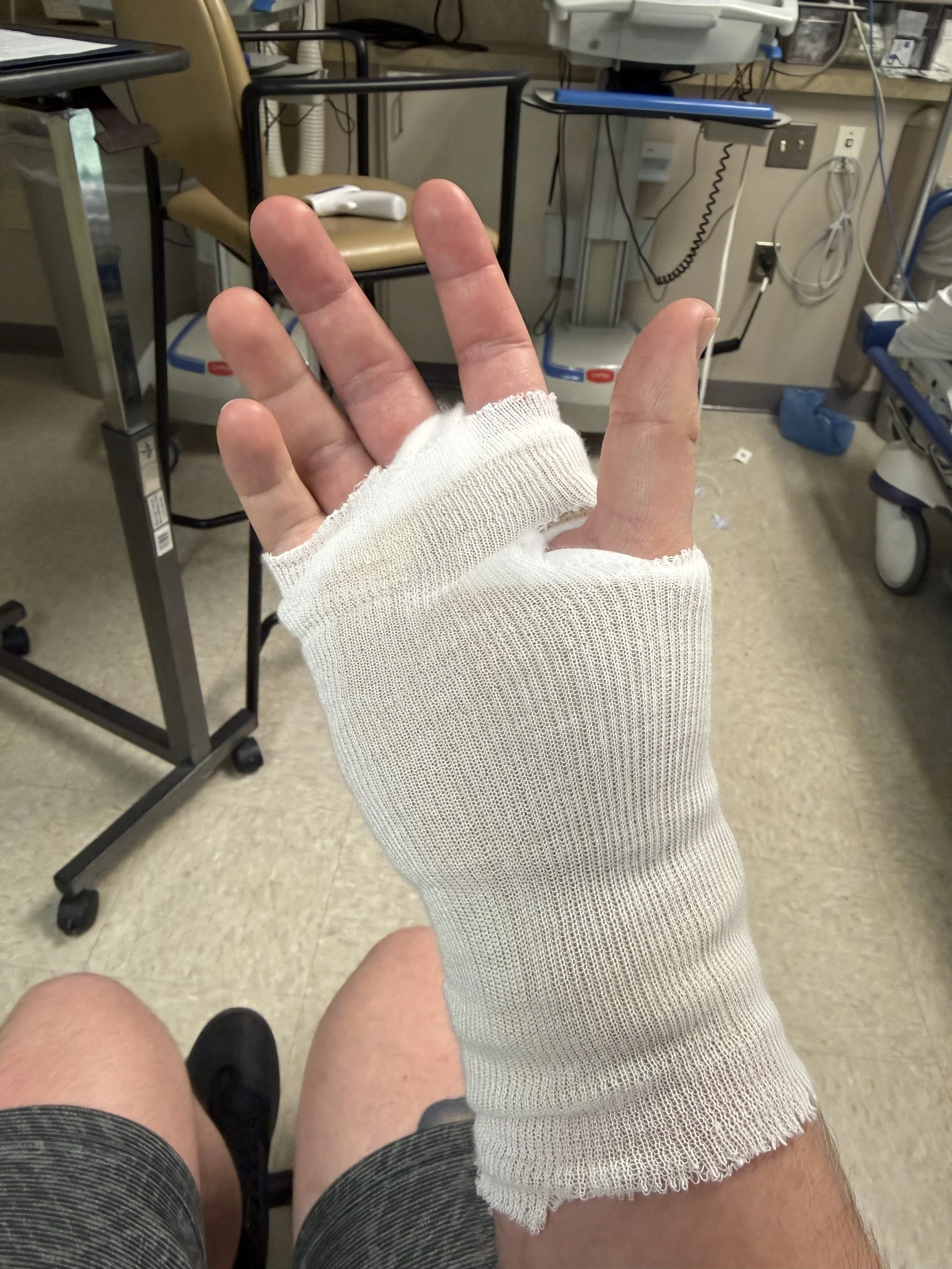
The bulky dressing I was put in post-operatively, to remain on for about 2-3 weeks.
I was recommended against wearing a sling; elevating your wrist above your heart helps a ton with swelling, but my surgeon said that a sling can have you instinctively not using your hand/wrist as much as you should be while healing and that can lead to scar adhesions. Obviously, this may depend on the severity of your carpal tunnel syndrome, if you had open vs. endoscopic surgery, and your surgeon’s preferred care.
Day 1: You can’t drive the day of surgery but you’re able to drive the following day, once anesthesia has left your system, and as long as you’re not taking narcotics for pain. I would not recommend driving manual at this point in time, as shifting into reverse, park, etc. in an automatic vehicle takes a little extra time and I would not trust myself to shift gears while actively driving. I also used text-to-speech for the first day because I love yapping and I couldn’t type on my phone very well.
The day after surgery, I started doing some finger and wrist exercises. I recommend doing them with both hands, actually; stretching and exercising can do wonders to prevent carpal tunnel as well! As with everything stated here, this is not medical advice and I would consult with your surgeon before doing anything.
I followed this guide and tried to do these exercises at least twice a day. In my case, since I had a ganglion cyst/trigger finger release as well, there were a few other exercises I did, as seen in this video. (I bring it up because ganglion cysts are not an uncommon comorbidity in artists especially!)
Day 2-4: Swelling reached its peak around here. Ibuprofen and other NSAIDs are great for reducing swelling, as well as keeping your hand above the level of your heart and cool compresses. I was given oxycodone as a prescription but I did not feel it was necessary at any point in the process of my healing, and I would say pain was either nonexistent or close to a 3 maximum. Acetaminophen worked well for me to manage pain as needed. If you need oxycodone or other narcotic medications after day 3, I would consult with your doctor about your pain not being managed.
I tried drawing a little bit on day 3, but with the placement of the sutures, I couldn’t find a comfortable way to hold my pen or stylus. This might not be a problem if you’re getting just carpal tunnel release done; the cyst removal site was more annoying to work around. Soft and bulky grips for pens are a lifesaver here!
At this point, twisting motions, like opening a bottle of water or using a pepper grinder, were completely out of the question. Scissors, anything that requires any sort of pressure or movement of this area is not going to work out. Ask for help or find accommodations that work for your degree of dexterity at this point. You also should not be lifting more than 1lb at this point, which means things like a reusable water bottle might be too much. Listen to your body and your post-op care.
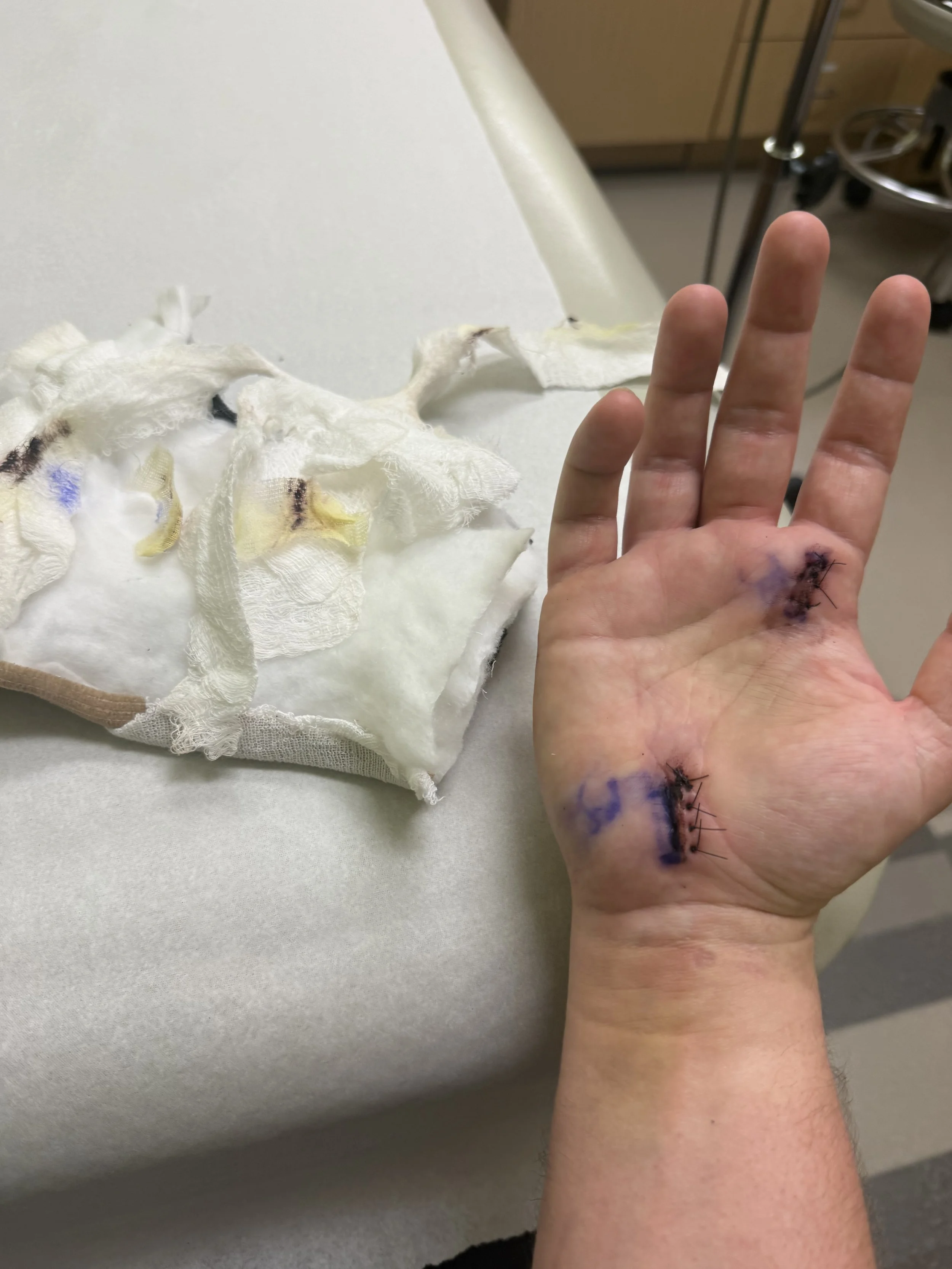
Day 5:
On day 5, I had to have my dressing re-wrapped because I sweat through it at a concert in an outdoor venue; I watched how they did it and they sent me home with a few extra supplies to rewrap it again if needed.
It was my first time seeing the surgical sites and I got confirmation that everything was healing great!
Day 6-10: After re-wrapping my hand, I had a less bulky dressing. This was great for me! I was originally expecting to return to work briefly during this period, but unfortunately I do not think I could tattoo until a later date.
If I was still doing only illustration as my job, I think I’d have been back to drawing by day 3 or 4, once the swelling reduced enough that I could comfortably grip my pencil, and I’d just be slowly increasing my workload until it was back to normal (which I imagine would be around day 10-14).
However, when applying a tattoo, there is a downward pressure applied with the machine to make sure that the ink is saturated. I do not think I would have been able to do this for more than maybe half an hour, which is not very conductive to my tattooing style and I would not be confident that the tattoo would be competent.
Everyone’s recovery and needs are going to be different; if you work a desk job like data entry, there’s not really a barrier to work at this point. I think if I had to guess, I’d say day 14 or so would be when I’d feel comfortable tattooing, though I’d recommend waiting until sutures are removed so it’s easier to effectively wash your hands between clients vs. wiping down your hands with wipes.
Day 11: I had scheduled a sinus surgery & septoplasty for day 11. Sounds crazy, but I stacked it so I didn’t have to take more time off. Prior to my septoplasty, I had to do a surgical scrub shower, and I intentionally removed my dressings and very, very carefully washed according to both my ENT and ortho’s instructions.
Day 12-17: Septoplasty was a much more intense surgery and was honestly kind of distressing for the first few days! I was so focused on the healing and needs for that surgery that I didn’t really write notes about the CTS surgery— though there wasn’t a ton to write home about during this part, truthfully. It’s keeping up with daily hand exercises to further improve grip strength, dexterity, and keeping scar adhesions from forming in the surgical sites. Throughout the first two weeks, I slowly went from being unable to open a doorknob with that hand to being able to pop open a cat food tin.
Day 18: Suture removal! The removal of the sutures was actually a bit more painful than I expected. This is the same day I had my septoplasty splints removed, where I planned to take a painkiller ahead of time, but I found the suture removal on this to be worse, though still only a 2-3 on the pain scale. It felt like being poked by a tiny scalpel and was surprisingly sharp, especially on the ganglion cyst sutures. Luckily this part takes all of 3 seconds per suture.
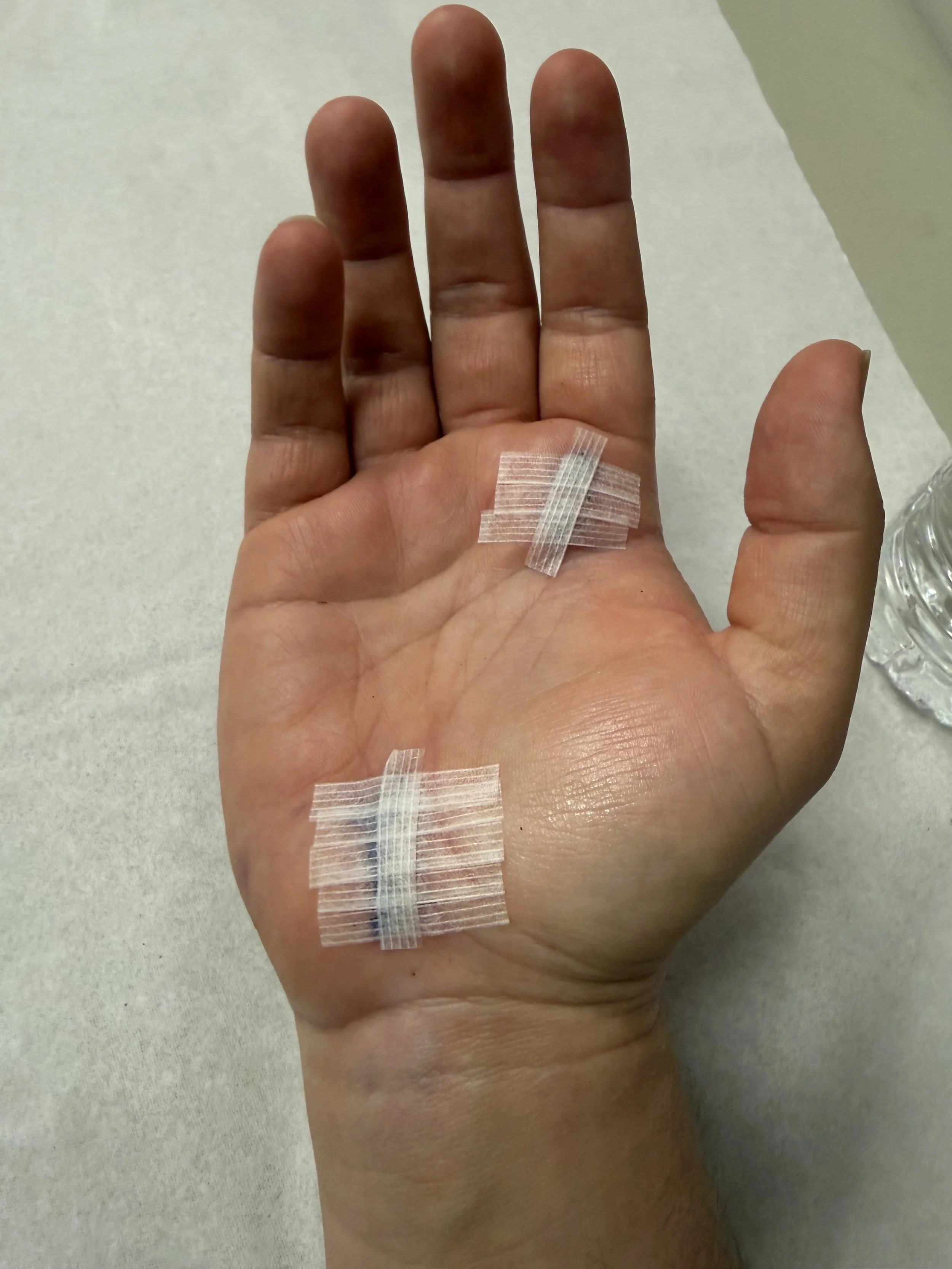
At this point, steri-strips were applied and I was given my aftercare instructions.
I could finally wash my hands again! I discussed my personal/career goals and what to expect for follow up care; since I have really good function and dexterity, a follow up visit wasn’t strictly necessary, but since I use my hands for my job I elected to schedule a follow up and get fitted for a gel wrist support (which just keeps you from putting too much pressure on the surgical site, which is still pretty sensitive.)
The steri-strips stay on for about 1-3 days and then will fall off on their own. I was told that I have a 5lb weight limit in this hand for about a week, then I can add about 5lb every week until I’m back to normal. Similarly, I am able to wash my hands, but not scrub at the sites for another week, nor am I allowed to soak the sites or apply lotion or scar gel yet. My surgeon recommended waiting until the 4 week mark before applying scar massage techniques, scar gel, or even just regular lotion, but at that point everything should be healed enough that there’s not a risk of reopening the surgical sites.
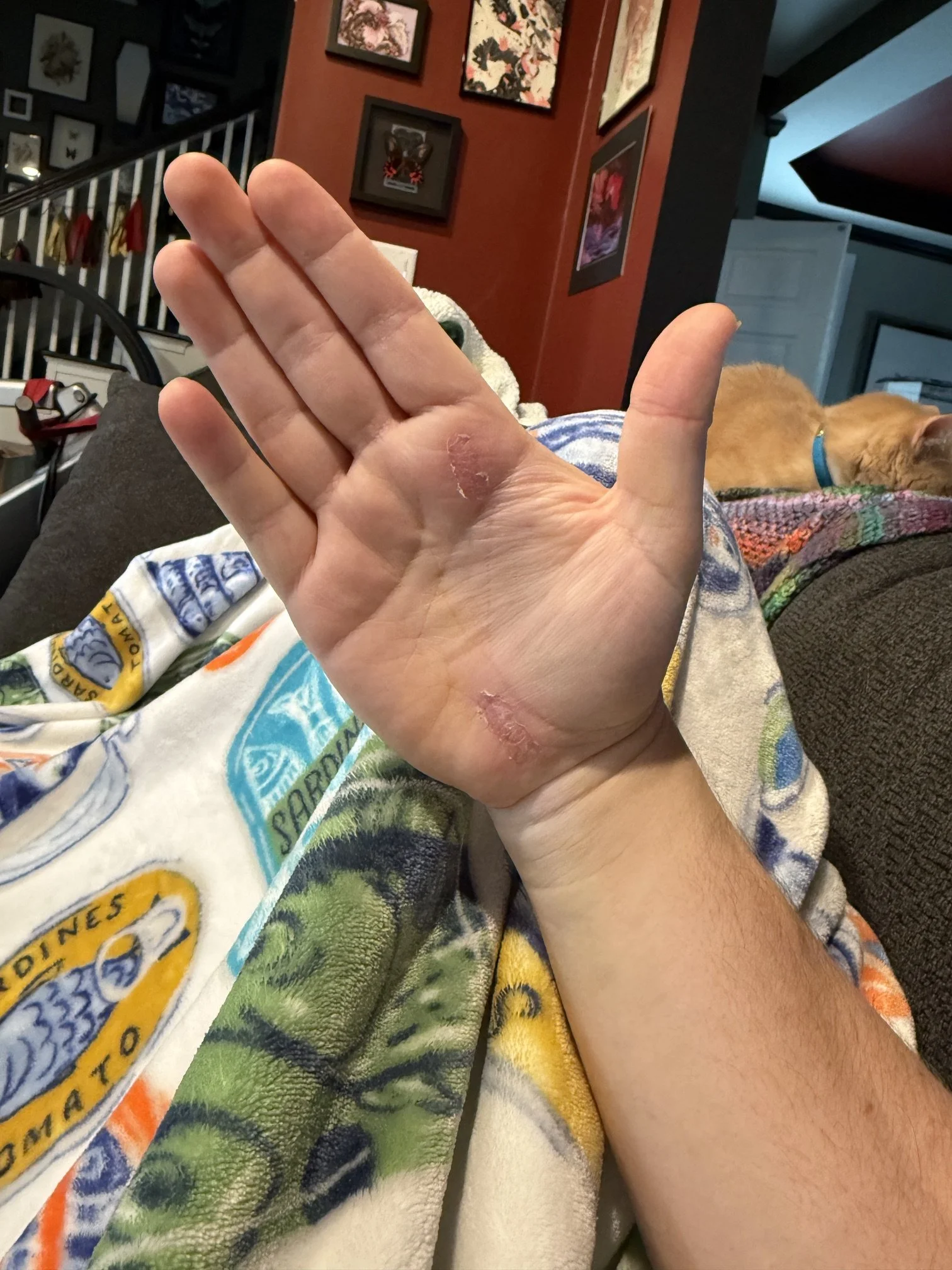
The current state of my hand; the surgical site areas and the skin on my hand looks like a bad sunburn peel but it doesn’t hurt at all!
It’s currently Day 21 as I write this, though I will likely edit to add a few more key moments as they come to pass (namely the 4 week follow up, scar management, and a full recovery retrospective)
The most important part from this stage onward is scar management & making sure that I don’t cause more tightness in the area by allowing excessive scar tissue to form.
I’m hopeful that writing a big long blog post— with images, links, videos, all of that jazz— has been helpful for other artists and people who use their hands a lot and have been dreading the idea of a carpal tunnel release. I feel like a social media post doesn’t get to cover the entire process quite as well and I also feel like carpal tunnel release surgery has come such a long way in such a short period of time; at the time of writing this, a lot of the vlogs and blogs about this procedure are from a time period where general anesthesia and more invasive procedures were more common, which definitely adds to the pervasive fear artists have about the surgery.
The biggest hurdle is the first week or so, but I found the recovery to be shockingly easy and mostly consisting of doing some hand exercises. I played a lot of Pokopia during this time period and did frequent walks around my garden. I also drove 4 hours to see Portugal. The Man in Charlotte, NC and overall was able to do most things in my life like normal, with some slight adjustments.
I have had a number of surgeries this year, some planned, some not, but I would say without a doubt this was one of the easiest procedures I’ve had done… to the point that I’m considering getting my left hand done next year if the steroid shot doesn’t work long term!